

Dictation comparison
The best dictation and speech recognition software 2026
Find out why choosing the right dictation or speech recognition software matters so much — and which criteria you should take into account. Our comparison shows the best solutions available in Switzerland, Austria and Germany in 2026.
- the most complete overview
- first consultation free
- from Switzerland

The advancing digitalisation of healthcare opens up new ways to work more efficiently in medical documentation. From conventional dictation solutions through AI-based voice-to-text systems to ambient AI tools, a broad range of solutions is available today. The software comparison below gives a compact overview of the most important speech recognition vendors, with a focus on use in a medical setting, particularly in the German-speaking countries.
11 systems match
-

MedicusData (LLM Systems GmbH)
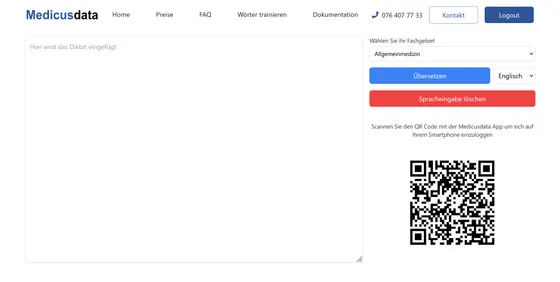
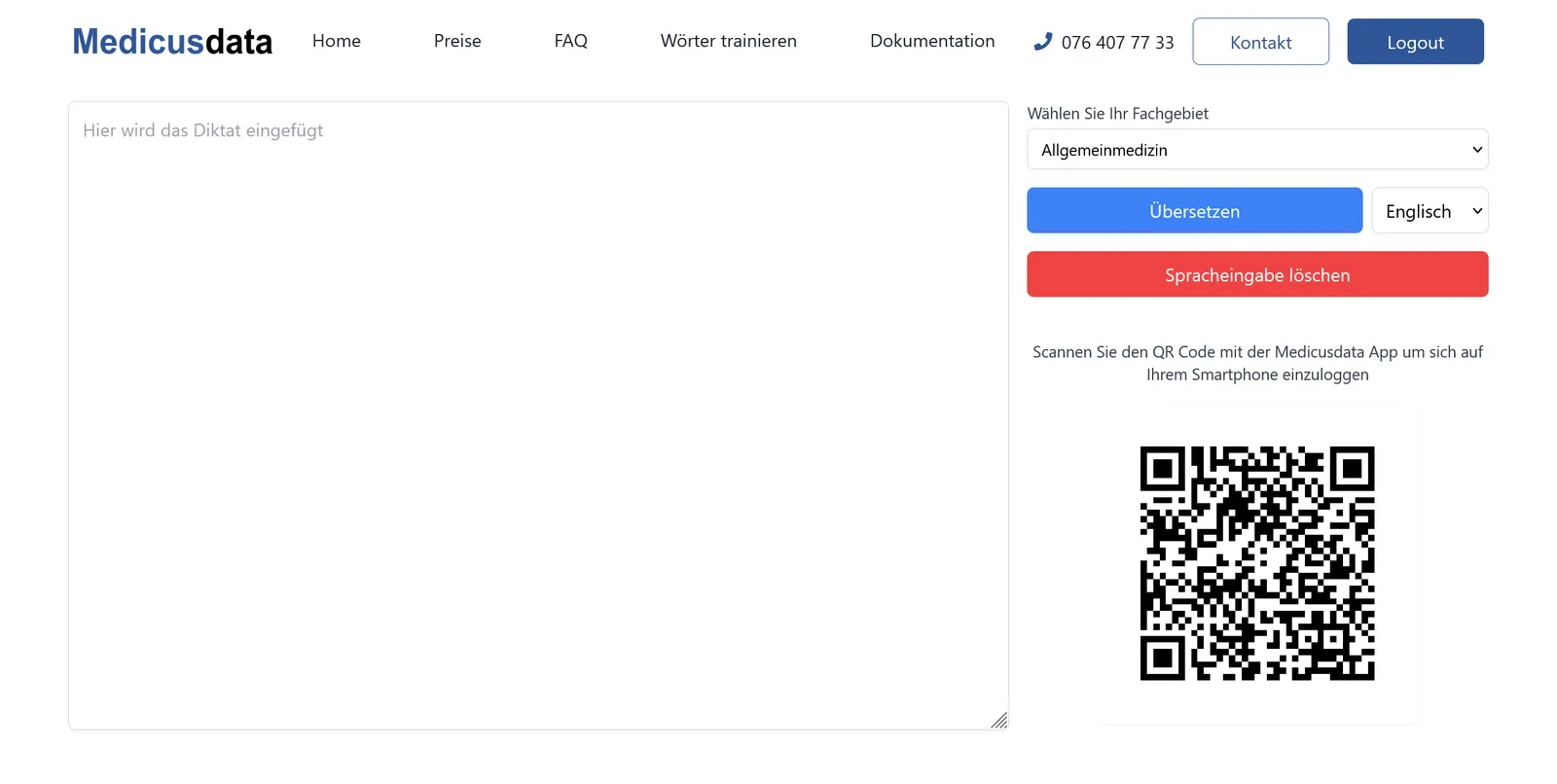
Medicusdata ist eine KI-gestützte Diktierlösung für medizinisches Fachpersonal in der Schweiz, die es ermöglicht, mittels Smartphone direkt in bestehende Anwendungen wie KIS, PIS, Word oder Outlook zu diktieren – unabhängig davon, wo sich der Cursor befindet. Die Software erfordert keine zusätzliche Hardware oder Schulung, funktioniert zuverlässig auch bei unterschiedlichen Akzenten und ist in weniger als fünf Minuten einsatzbereit.
5.0/ 5
based on 1 rating
- Android App
- iOS App
- Web App
- Windows App
- Mac App
- Deutsch
- Französisch
- Italienisch
- Englisch
- DSGVO/DSG
Customer ratings
-
M 2025-11-23
Diese Spracherkennung hat mit Abstand das grösste Potential und wird laufend besser.
-

Dragon Medical One (Microsoft Corporation)
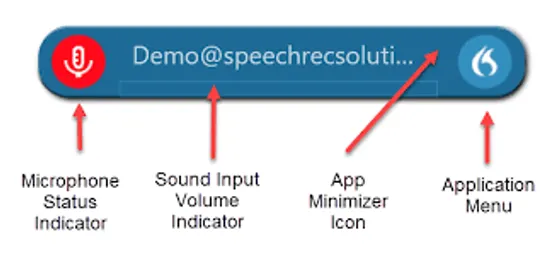
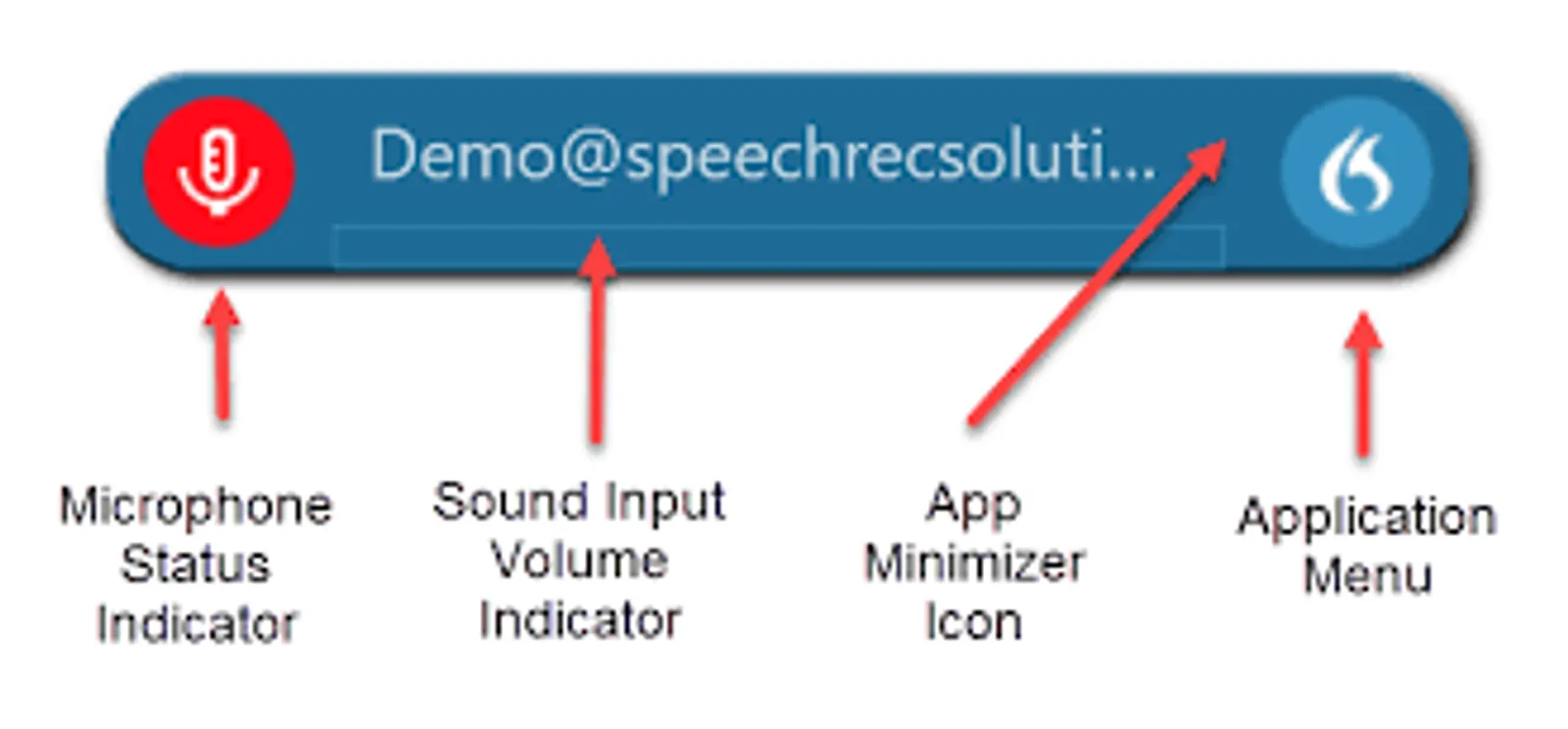
Dragon Medical One ist eine cloudbasierte medizinische Spracherkennungslösung von Nuance (Microsoft), die speziell für Gesundheitsfachpersonen entwickelt wurde. Sie ermöglicht es Ärzt:innen, medizinische Dokumentationen effizient per Spracheingabe zu erstellen, ohne vorheriges Training oder aufwendige Konfigurationen. Die Software bietet eine hohe Erkennungsgenauigkeit, unterstützt mehrere Sprachen, darunter Deutsch, Französisch, Italienisch und Englisch, und passt sich automatisch an verschiedene Akzente an. In der Schweiz wird Dragon Medical One von Voicepoint gehostet, wobei alle Daten in ISO-zertifizierten Rechenzentren innerhalb des Landes gespeichert werden, um höchste Datenschutzstandards zu gewährleisten. Die Lösung integriert sich nahtlos in bestehende Praxis- und Klinikinformationssysteme und bietet zusätzliche Funktionen wie individuelle Sprachbefehle, Textbausteine und die Nutzung des Smartphones als drahtloses Mikrofon über die PowerMic Mobile App. Mit Dragon Medical One können medizinische Fachpersonen ihre Dokumentationsprozesse optimieren und mehr Zeit für die Patientenversorgung gewinnen.
3.0/ 5
based on 1 rating
- Android App
- iOS App
- Windows App
- Mac App
- Deutsch
- Französisch
- Italienisch
- Englisch
- DSGVO/DSG
Customer ratings
-
M 2025-11-23
Funktioniert. Macht aber zu viele phonetische Fehler. Unterstützt kein Schweizer Hochdeutsch. Bedienung teilweise mühsam.
-

Mira (MediaInterface GmbH)
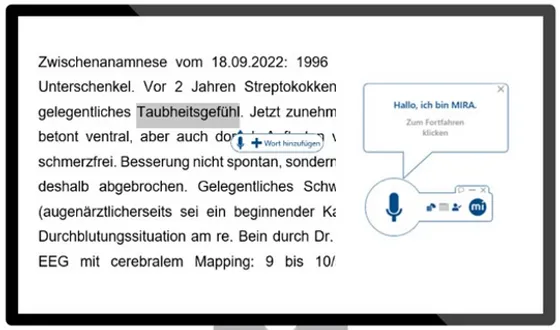
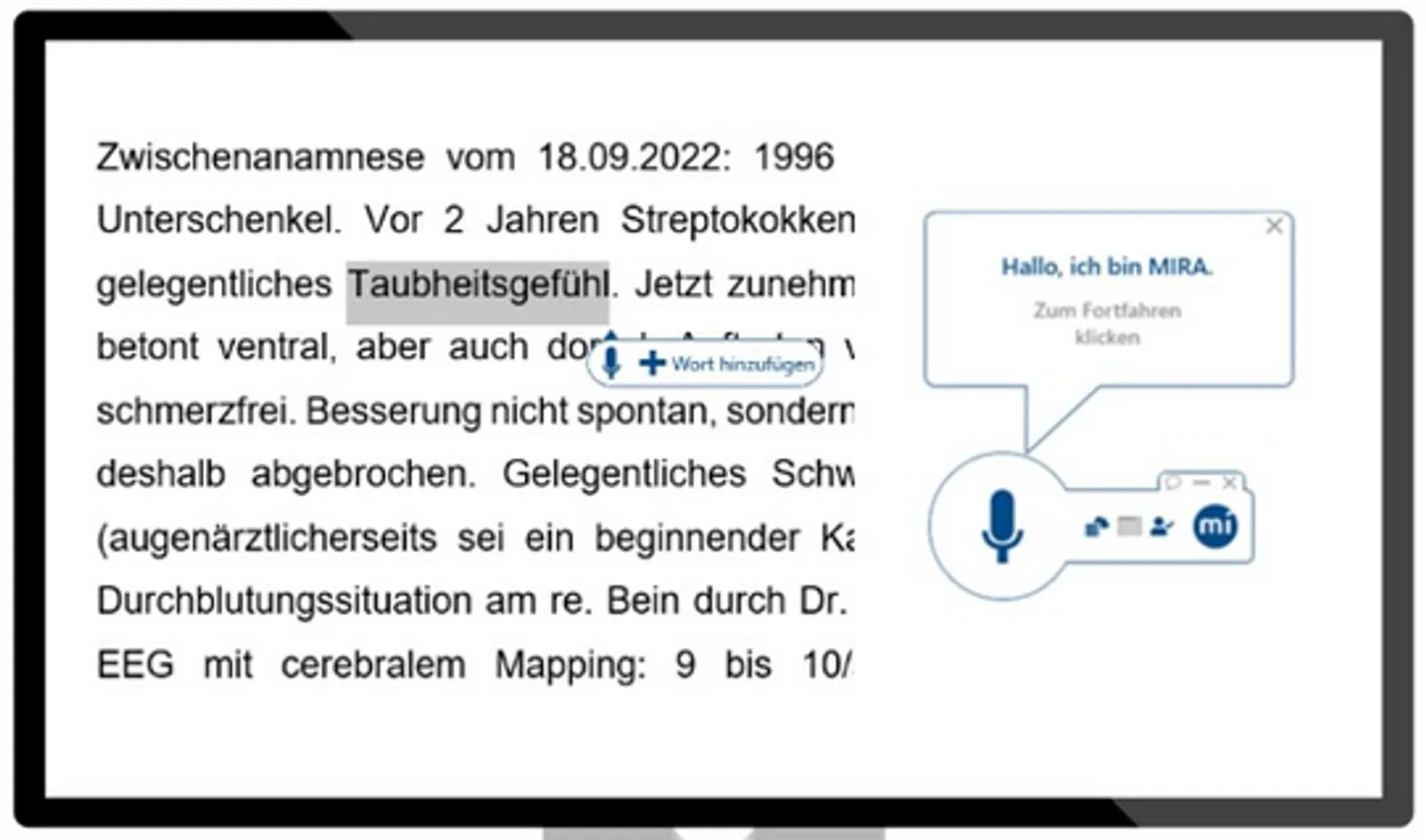
MIRA® medical ist eine cloudbasierte, KI-gestützte Spracherkennungslösung der MediaInterface GmbH, die speziell für den medizinischen Bereich entwickelt wurde. Die Software ermöglicht es, medizinische Dokumentationen effizient per Spracheingabe zu erstellen, ohne vorheriges Training oder aufwendige Konfigurationen. MIRA® medical integriert sich nahtlos in bestehende Windows-Umgebungen sowie Anwendungen wie KIS, Microsoft Office und Outlook. Die Software bietet Funktionen wie Echtzeit-Transkription, Sprachbefehle zur Navigation und Bearbeitung von Texten sowie die Nutzung individueller Textbausteine. Mit einer hohen Erkennungsgenauigkeit von 99 % und Unterstützung für medizinische Fachbegriffe ist MIRA® medical besonders für den Einsatz in Kliniken und Praxen geeignet. Die Anwendung ist DSGVO-konform, speichert Daten auf Servern in Deutschland und bietet zusätzliche Backups in Frankreich und den Niederlanden. MIRA® medical ist als App für iOS und Android verfügbar.
3.0/ 5
based on 1 rating
- Android App
- iOS App
- Windows App
- Mac App
- Deutsch
- Französisch
- Englisch
- DSGVO/DSG
Customer ratings
-
J 2026-01-03
Grundsätzlich sehr benutzerfreundlich. Leider nicht immer stabil.
-

Dictalogic (Dictalogic Ltd.)
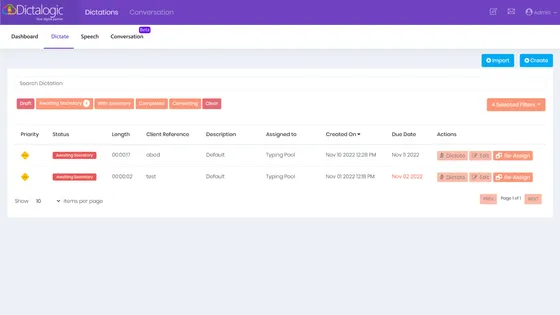
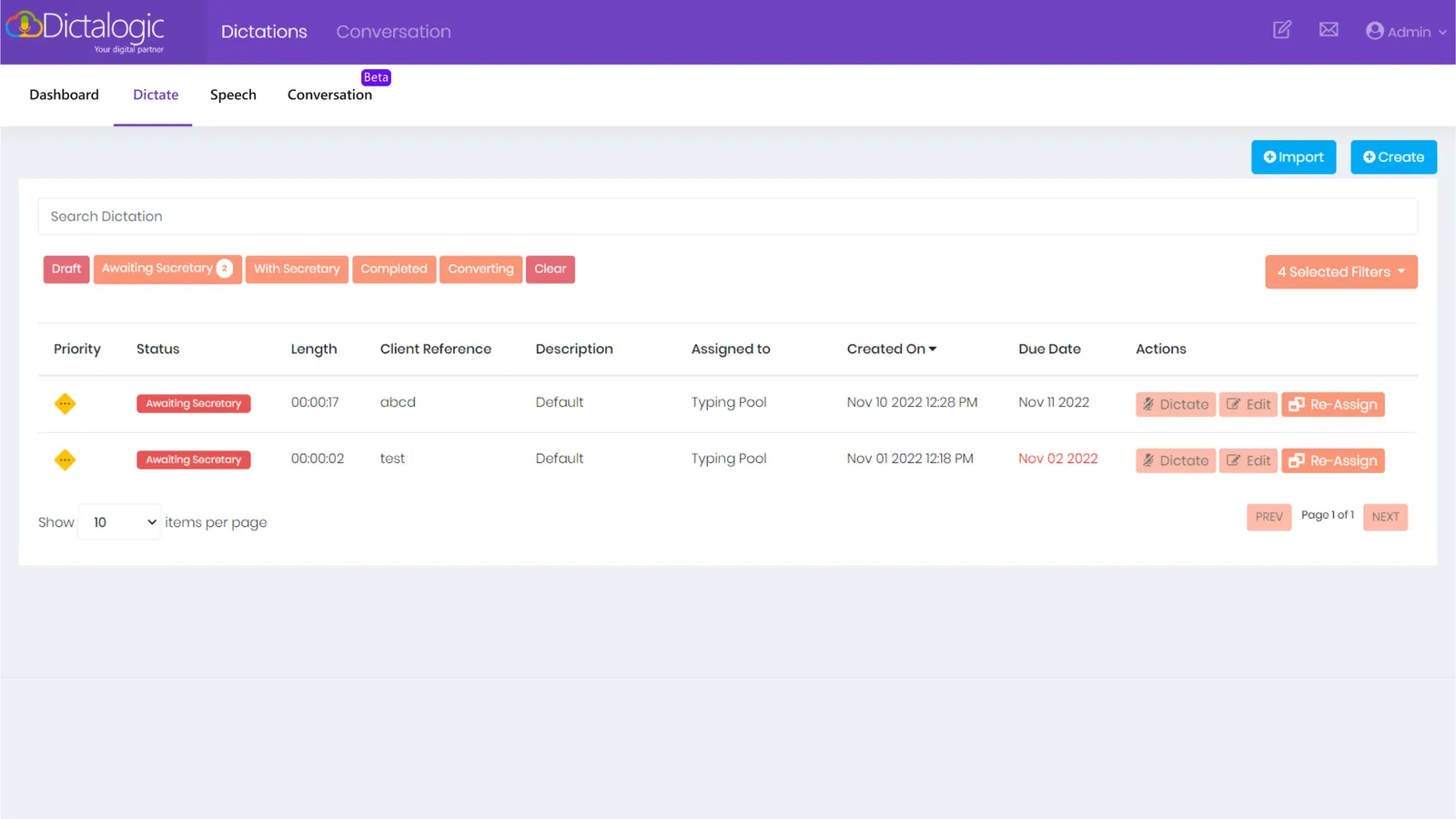
Dictalogic ist eine cloudbasierte Diktierlösung, die speziell für die Anforderungen von medizinischen Einrichtungen entwickelt wurde. Die Plattform bietet Funktionen wie Audio-zu-Text, Echtzeit-Spracherkennung und Konversations-Transkription, unterstützt durch KI und branchenspezifische Fachwörterbücher. Dank Integration mit Microsoft Azure gewährleistet Dictalogic hohe Sicherheitsstandards und Konformität mit Datenschutzrichtlinien wie HIPAA und DSGVO. Nutzer können über Desktop, mobile Apps oder Webportale diktieren und ihre Arbeitsabläufe flexibel gestalten.
no rating yet
- Android App
- iOS App
- Web App
- Windows App
- Deutsch
- Französisch
- Italienisch
- Englisch
- DSGVO/DSG
-

Diktus
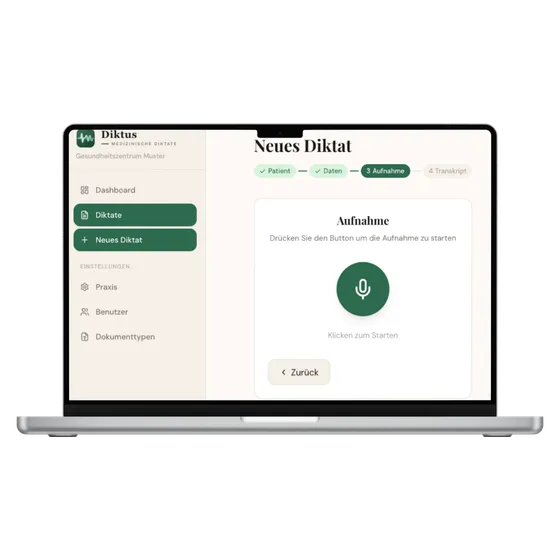
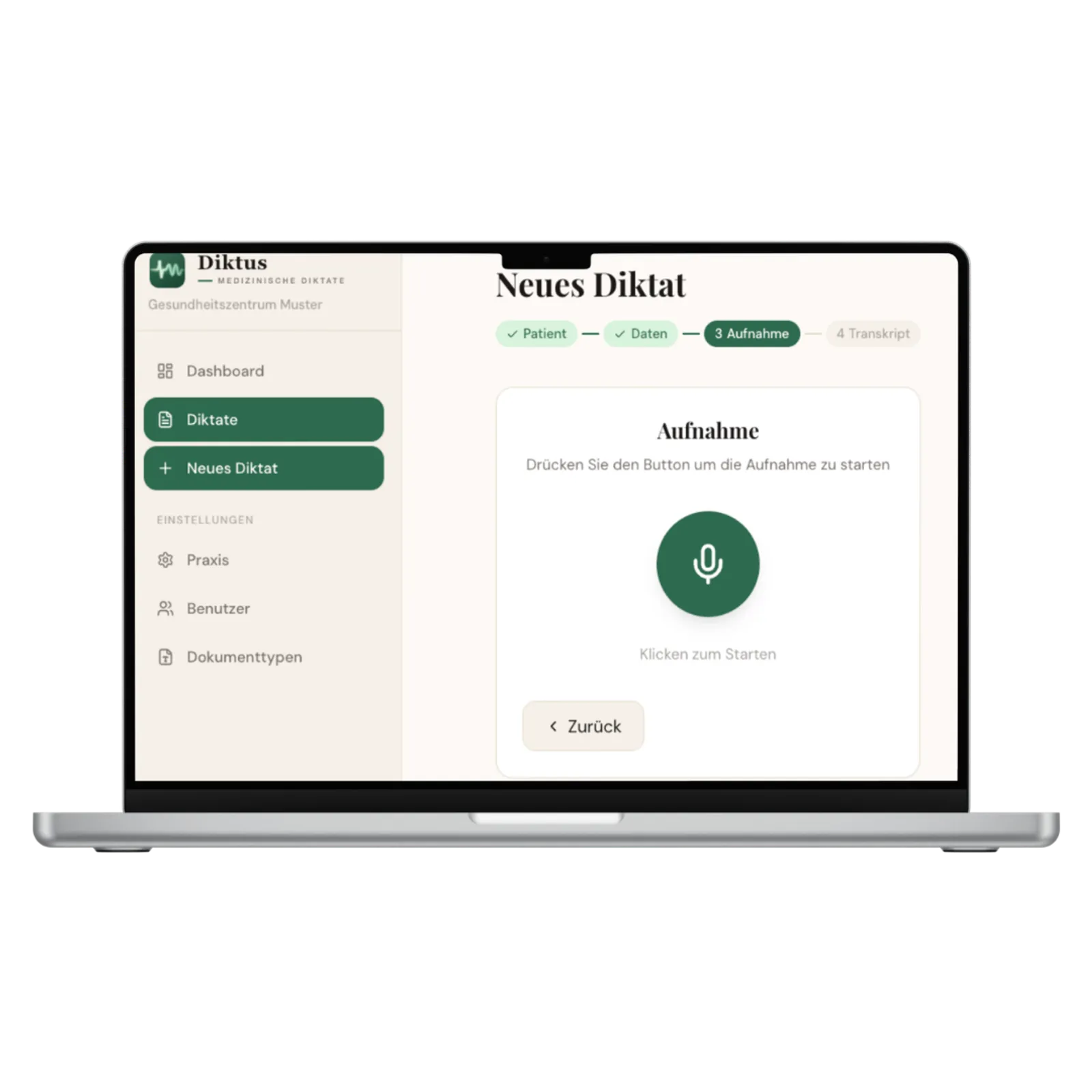
Diktus ist eine Dokumentationsplattform für Schweizer Arztpraxen, die medizinische Diktate automatisch transkribiert. Ärzte diktieren, und die KI erstellt daraus ausgefüllte Medformulare sowie Arztbriefe. Die Software ist direkt in das Praxisinformationssystem Aeskulap integriert und übernimmt Patientenstammdaten automatisch. Die Spracherkennung transkribiert sowohl Hochdeutsch als auch Schweizerdeutsch mit hoher Präzision. Laut Anbieter soll dadurch bis zu 70% Zeitersparnis bei der Dokumentation erreicht werden.
no rating yet
- Web App
- Deutsch
- DSGVO/DSG
-

Finalscribe (Vitalink Media FZ-LLC)
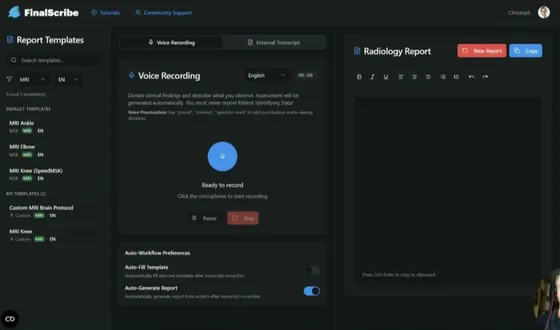
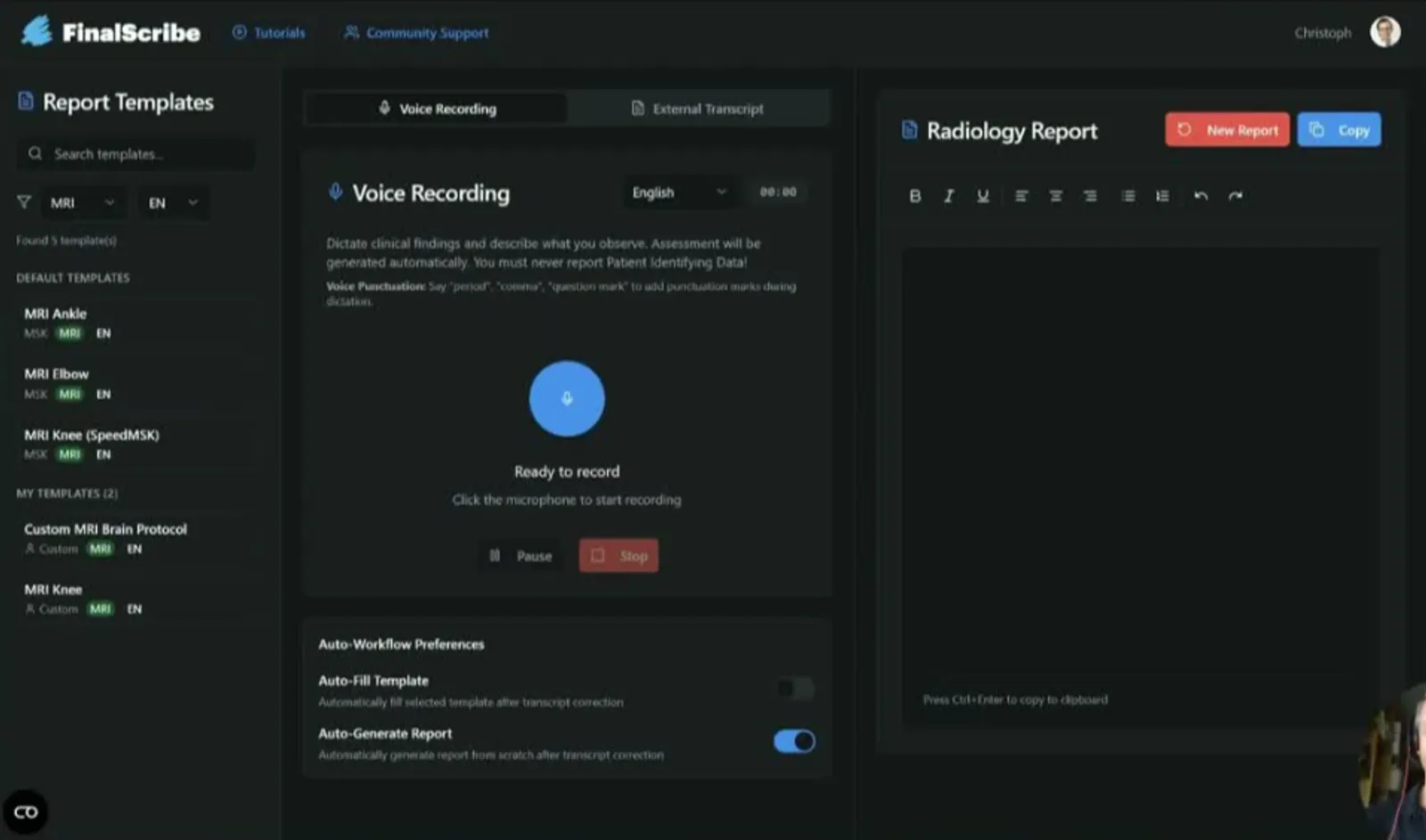
FinalScribe ist eine KI-gestützte medizinische Transkriptions- und Diktier-Software, die speziell für Teleradiologen und freiberufliche Radiologen entwickelt wurde. Die Anwendung wurde von dem Schweizer Radiologen PD Dr. med. Christoph Agten entwickelt und ermöglicht es, via Spracherkennung radiologische Befunde zu diktieren, die dann automatisch in individuell konfigurierbare Berichtsvorlagen übernommen werden. Die Plattform ist mehrsprachig ausgelegt und unterstützt den gesamten Befundungsworkflow mit vordefinierten und anpassbaren Vorlagen für verschiedene Fachgebiete. FinalScribe versteht sich als «Zero-Footprint»-Lösung, d. h. es ist keine lokale IT-Installation erforderlich. Das Tool richtet sich primär an Einzelpraktiker und kleine Radiologie-Einheiten, die ihre Befundungsgeschwindigkeit ohne aufwändige IT-Infrastruktur steigern möchten.
no rating yet
- Web App
- Englisch
-

GoSpeech (Grundig Business Systems GmbH & Co. KG)
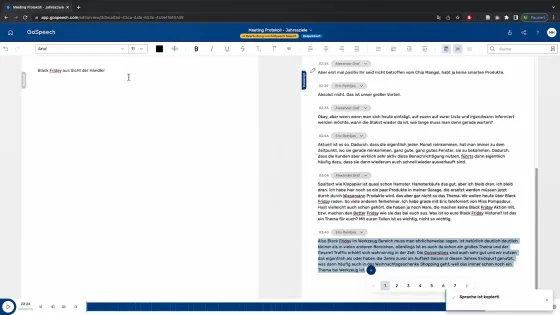
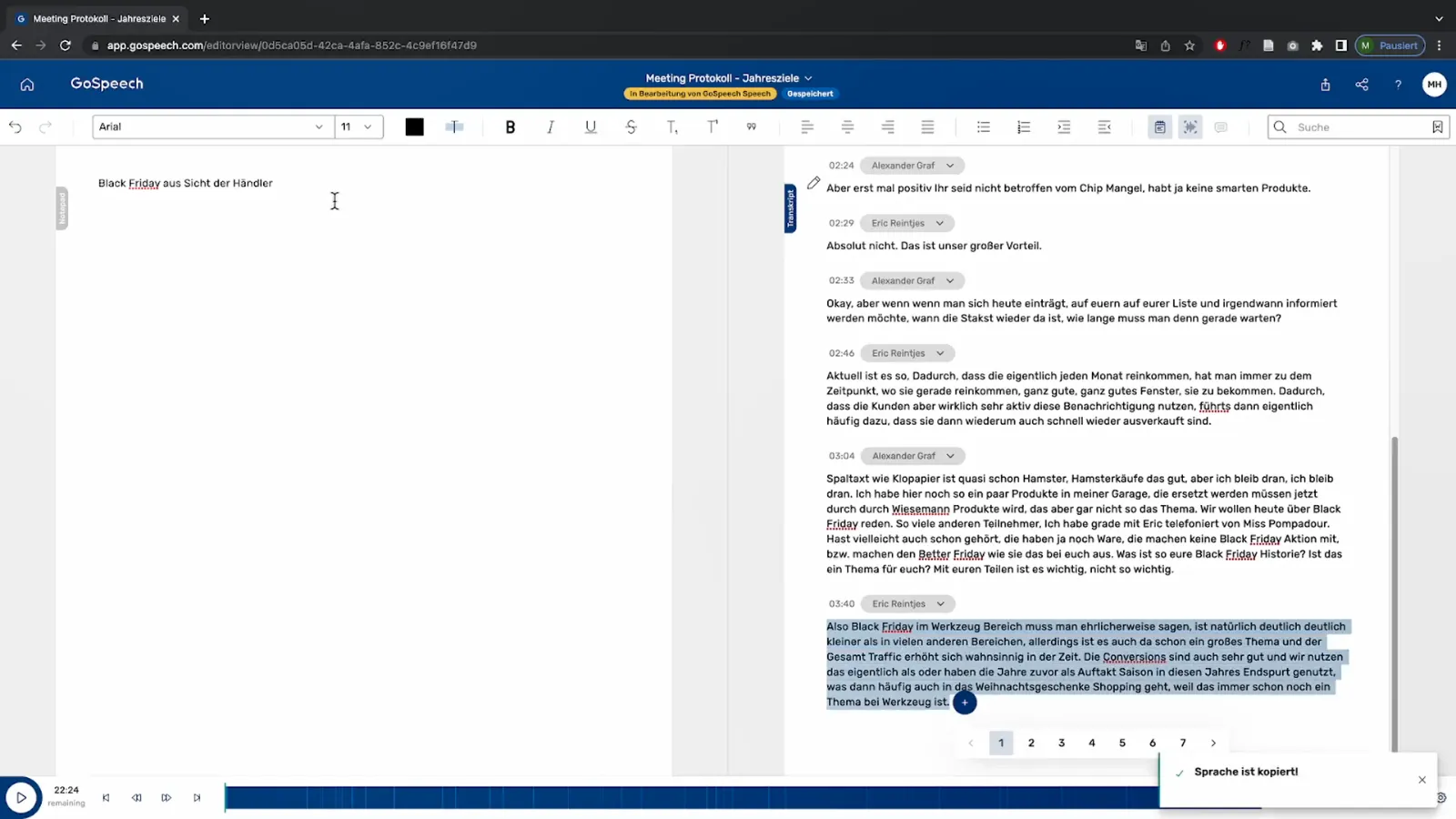
GoSpeech ist eine KI-basierte Transkriptionssoftware von Grundig Business Systems, die Audio- und Videodateien automatisch in Text umwandelt. Sie erkennt verschiedene Sprecher und Dialekte, unterstützt zahlreiche Dateiformate und bietet einen intuitiven Online-Editor zur Nachbearbeitung. Die Software läuft DSGVO-konform auf deutschen Servern. Mit Funktionen wie individuellem Wörterbuch, Teamarbeit und automatischer Untertitelung ist GoSpeech eine vielseitige Lösung für effiziente Dokumentation.
no rating yet
- Web App
- Deutsch
- Französisch
- Italienisch
- Englisch
- DSGVO/DSG
-

MARIS Diktat (MARIS Healthcare GmbH)
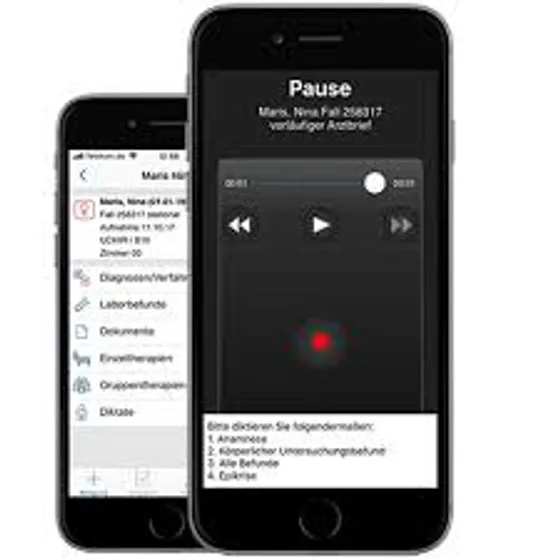
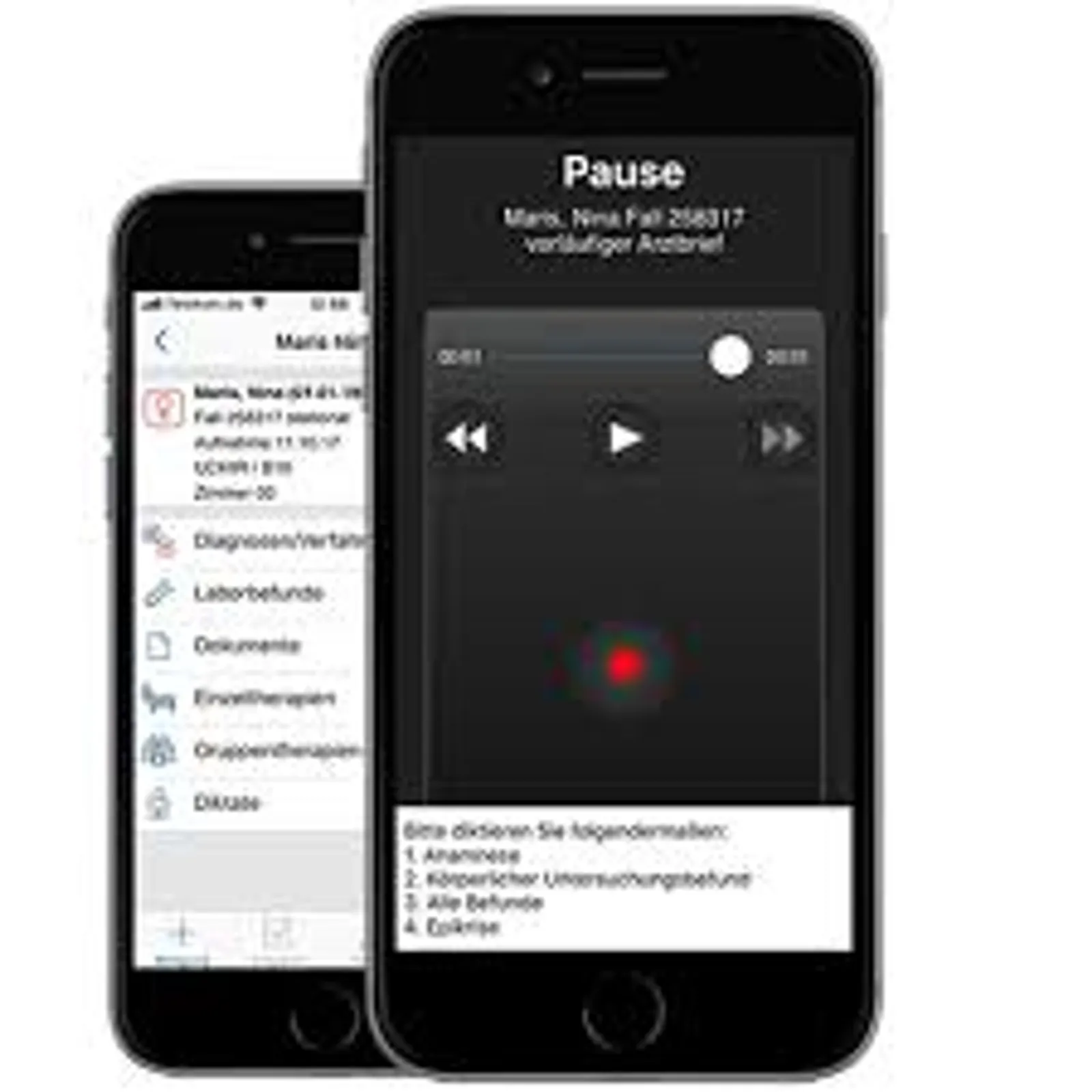
MARIS Diktat ist eine digitale Diktierlösung der MARIS Healthcare GmbH, die speziell für den medizinischen Bereich entwickelt wurde. Sie ermöglicht es Ärztinnen und Ärzten, Diktate sowohl stationär als auch mobil zu erstellen und nahtlos mit Patientendaten zu verknüpfen. Die Lösung unterstützt verschiedene Endgeräte, darunter klassische Diktiergeräte von Philips und Grundig sowie iOS-basierte mobile Geräte. Funktionen wie die Priorisierung von Diktaten, die Anbindung externer Schreibdienste und die Integration in Krankenhausinformationssysteme (KIS) optimieren den Dokumentationsprozess und reduzieren den administrativen Aufwand.
no rating yet
- iOS App
- Web App
- Windows App
- Deutsch
- Französisch
- Italienisch
- Englisch
- DSGVO/DSG
-

Solventum™ Fluency Direct™ (Solventum Corporation)
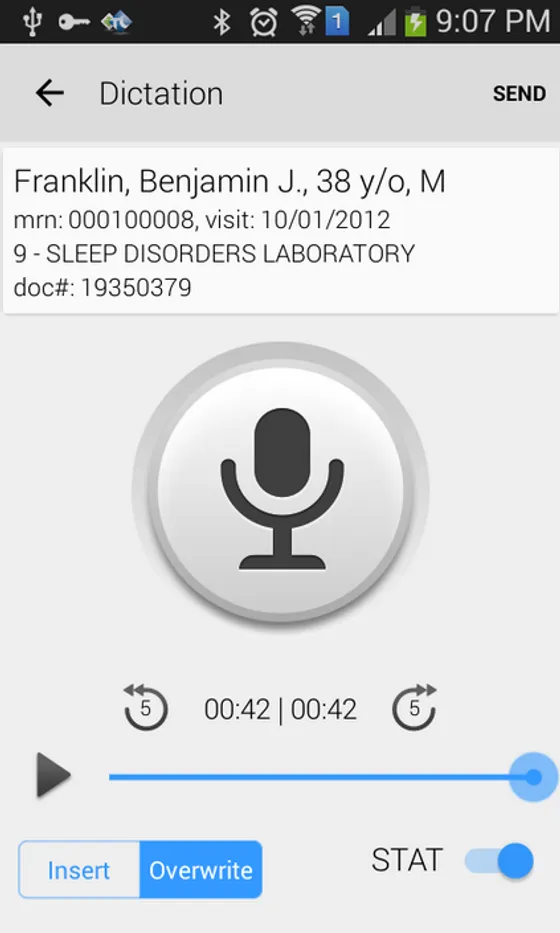
Solventum™ Fluency Direct™ ist eine cloudbasierte medizinische Spracherkennungslösung, die es Ärzt:innen ermöglicht, klinische Dokumentationen direkt in über 250 elektronische Gesundheitsakten (EHRs) wie Epic, Cerner, MEDITECH und Allscripts zu erstellen, zu bearbeiten und zu signieren. Durch den Einsatz von Natural Language Understanding (NLU) und integrierter Computer-Assisted Physician Documentation (CAPD) bietet die Software kontextbezogene Echtzeit-Feedbacks, um die Qualität der Dokumentation zu verbessern und administrative Aufgaben zu reduzieren. Mit Funktionen wie Sprachbefehlen zur Navigation, Single Sign-On und mobiler Diktiermöglichkeit über die Fluency™ Mobile App unterstützt Fluency Direct eine effiziente und flexible Arbeitsweise. Die Lösung ist DSGVO-konform und wurde entwickelt, um die klinische Dokumentation zu optimieren und die Belastung des medizinischen Personals zu verringern.
no rating yet
- Android App
- iOS App
- Web App
- Windows App
- Mac App
- Deutsch
- Französisch
- Italienisch
- Englisch
- DSGVO/DSG
-

SpeechLive (Speech Processing Solutions GmbH)
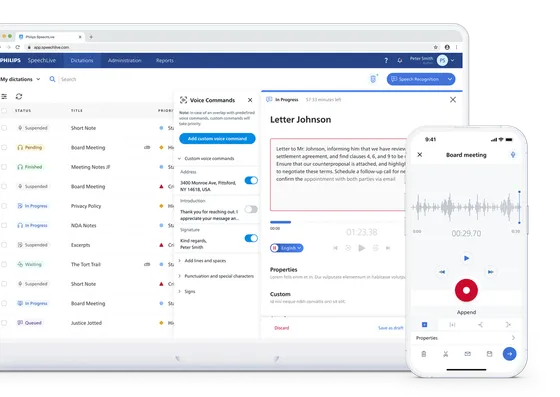
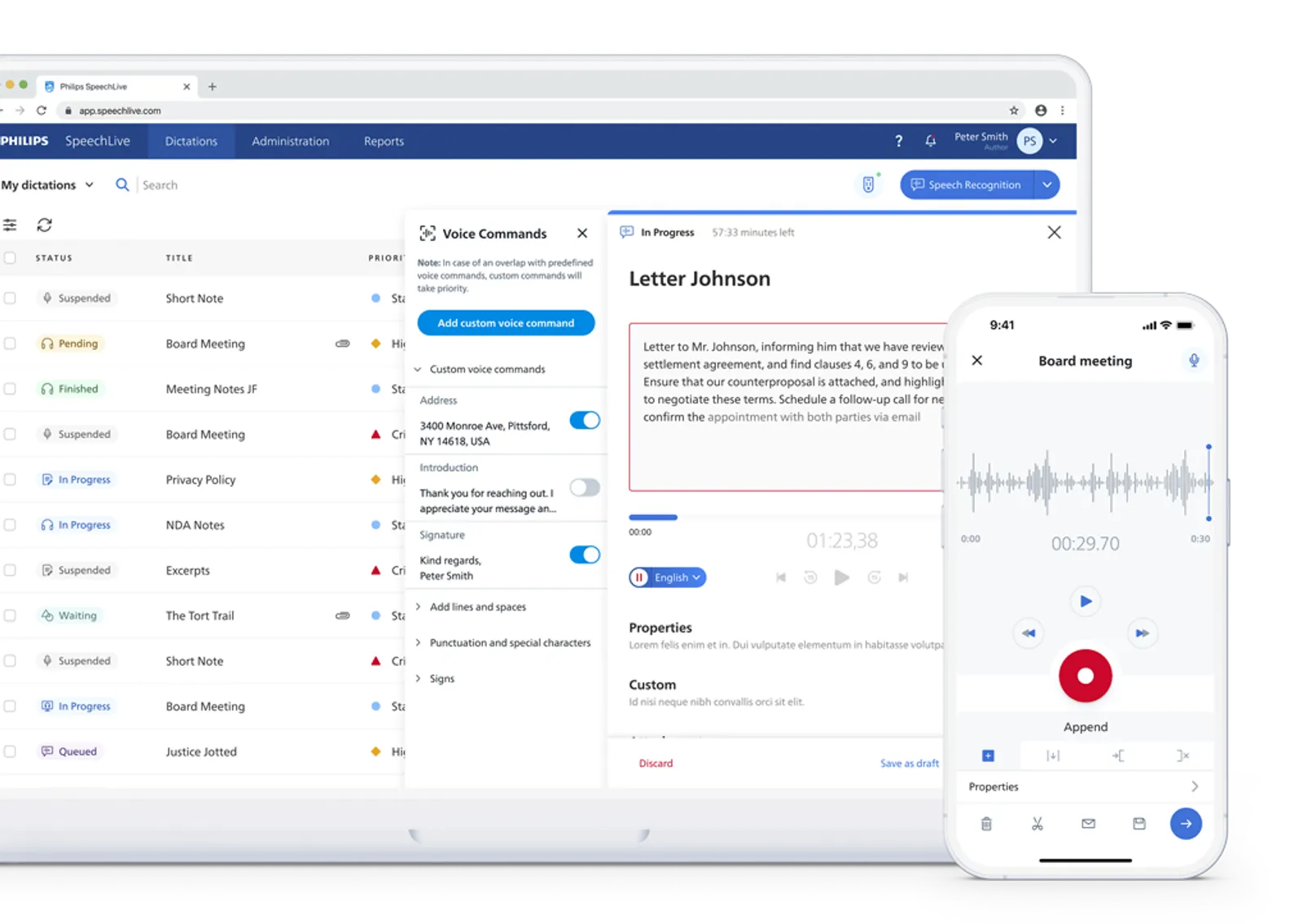
Philips SpeechLive ist eine cloudbasierte Diktier- und Transkriptionslösung, die es Fachkräften ermöglicht, Sprachaufnahmen direkt über den Webbrowser oder eine mobile App zu erstellen und automatisch in Text umzuwandeln. Die Plattform bietet Funktionen wie integrierte Spracherkennung, Workflow-Management, sichere 256-Bit-AES-Verschlüsselung und Kompatibilität mit Philips-Geräten wie SpeechMike und PocketMemo. SpeechLive unterstützt sowohl Echtzeit- als auch nachträgliche Transkription und lässt sich nahtlos in bestehende Systeme integrieren, um den Dokumentationsprozess effizienter zu gestalten.
no rating yet
- Android App
- iOS App
- Web App
- Windows App
- Mac App
- Deutsch
- Französisch
- Italienisch
- Englisch
- DSGVO/DSG
-

Voice Pro Dictate (Linguatec Sprachtechnologien GmbH)
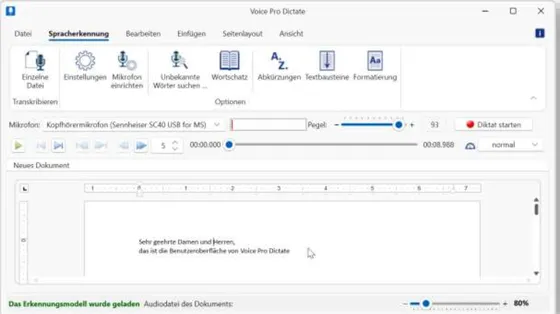
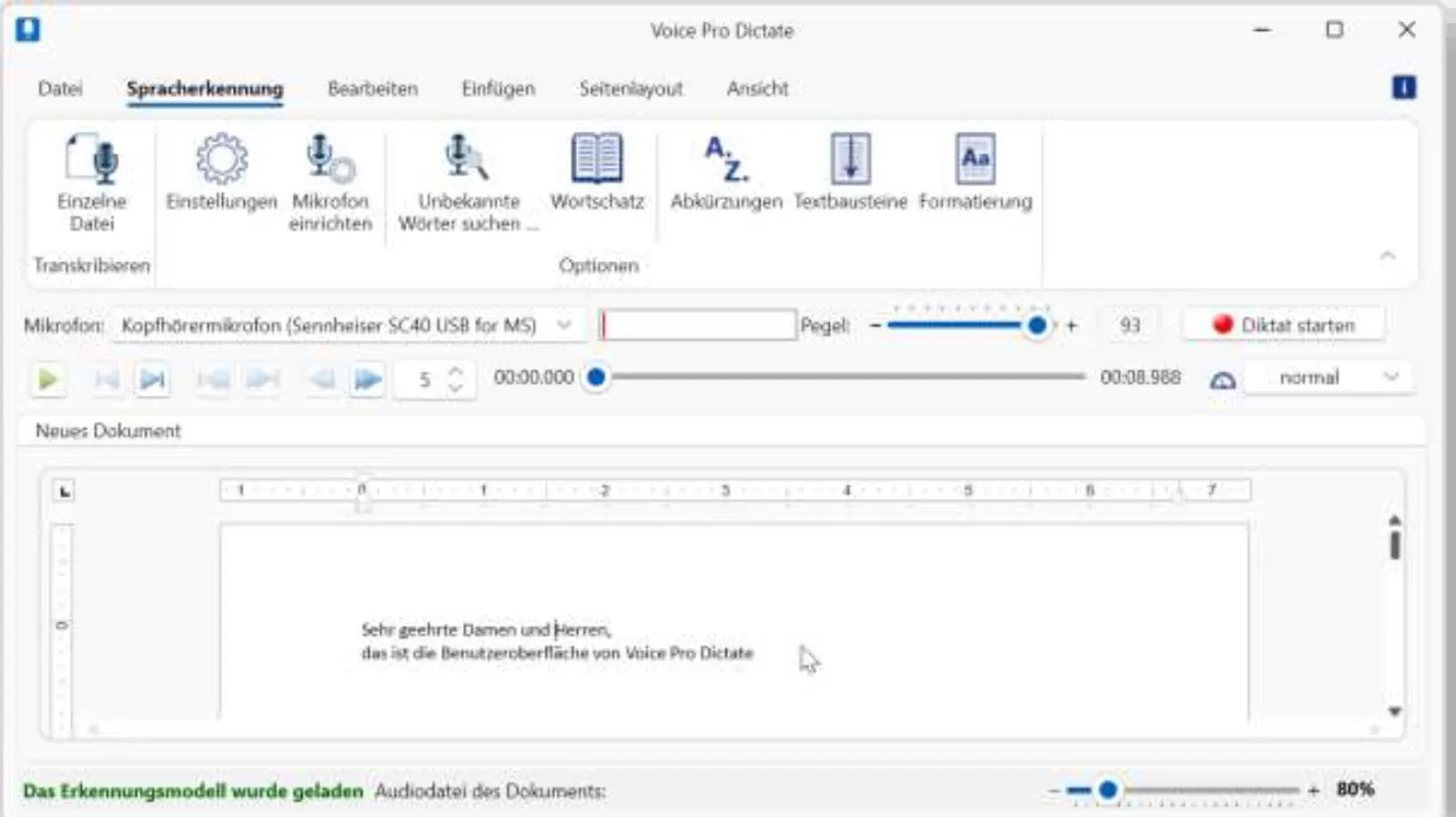
Voice Pro Dictate von Linguatec ist eine KI-gestützte Spracherkennungssoftware für Windows. Die Software ermöglicht eine zuverlässige Umwandlung von Sprache in Text direkt auf dem Desktop, ohne Cloud-Anbindung oder Abonnementkosten. Mit integrierten Fachvokabularen für Medizin bietet sie eine hohe Erkennungsgenauigkeit und unterstützt verschiedene Eingabegeräte wie Headsets, Mikrofone und Fußschalter. Voice Pro Dictate ist kompatibel mit Windows 10 und 11 und lässt sich nahtlos in bestehende Anwendungen wie Microsoft Word und Outlook integrieren. Die Software ist lernfähig, individuell anpassbar und eignet sich besonders für Anwender, die Wert auf Datenschutz und lokale Datenverarbeitung legen.
no rating yet
- Windows App
- Deutsch
- DSGVO/DSG
Criteria for the decision
Buying software is an important decision that calls for organisational, technical and financial consideration.
Here are the 12 most important points to bear in mind for a sound choice:
1. Cost structure
Examine the
total cost
of the software, including licence fees, implementation costs, training costs and any recurring charges.
Establish whether it is a one-off payment or a subscription fee, and how that affects your budget in the long run.
2. Functions
Make sure the software offers every function your practice or hospital needs.
If users are to work at the computer as independently as possible, they need live speech recognition. Or will the texts still be checked by your secretariat?
Are dictations recorded only at the PC, or does dictating on the move have to be possible too?
Do you want to equip every computer with a high-quality dictation microphone, or do you want to use the smartphone as the microphone?
3. Infrastructure
Establish which PC infrastructure the practice software runs on. Is it a locally installed solution or a cloud solution?
If it is a locally installed solution, further consideration of security (firewall), backups and resilience is necessary. Bear in mind that locally installed solutions frequently bring costs down the line.
If it is a cloud solution, internet speed and resilience are of major importance.
Establish which operating systems are supported.
4. Scalability
Check whether the software is
scalable
as your organisation grows. You should make sure the software can still meet your requirements in future.
Do you intend to increase the number of staff and/or the number of sites in future? Are those requirements supported?
5. Integration with existing and future systems
Is integration with your existing primary system (practice, hospital or radiology information system) possible, or necessary? Integrations reduce the workload considerably. Some solutions do work smoothly without a specific integration, however. You should test the workflows together with your primary system.
6. Artificial intelligence
Modern dictation solutions frequently use built-in speech recognition systems based on powerful large language models (LLMs). In a medical setting in particular, where sensitive patient data is processed, it is essential that the processing takes place exclusively at clearly defined locations that comply with data protection law. Vendors therefore have to ensure, not only contractually but also technically, that all applicable data protection requirements are met. That includes choosing suitable hosting locations, encrypted transmission and storage of data, and regular security reviews and audits.
7. Training and support
Take into account the training costs for your team, to make sure every member of staff can use the software effectively.
Examine the software's support options, in terms of response time, hours of availability and cost.
8. Updates and maintenance
Find out about the cost and the schedule of software updates and maintenance services. Are software updates included in the price or do they have to be paid for separately?
9. Data security and compliance
Make sure the software meets the data protection rules and security standards required for health data. Check in particular whether the data is encrypted in transit and at rest, whether it is transmitted securely and where it is stored. Is access protected by two-factor authentication? Establish as well which data is left behind on the end device and whether a “zero footprint solution” is part of the product. Is access logged?
10. References and ratings
Read ratings from users of the software. Ask for references and speak directly with other practices about their experience. Take the time to assess your future dictation software in live operation.
Consult the Unomed software comparison.
11. Requirements specific to your country
Consider local software. That way you make sure the statutory requirements and standards applicable in your country are met. In particular,
data protection laws
are not uniform internationally. The new Swiss Data Protection Act has fortunately been aligned with the European GDPR. Outside the EU, however, the legal position can differ considerably, which makes the corresponding solutions carry significant risk.
12. Long-term cost-benefit analysis
Carry out a cost-benefit analysis to make sure the software supports the profitability of your practice.
If your software supports the efficiency of your practice better than the alternative, then in most cases the additional cost will pay for itself quickly.